
|
|
_ |
|

|
A
palace
that it has made the history of Brigandage
 |
|

|
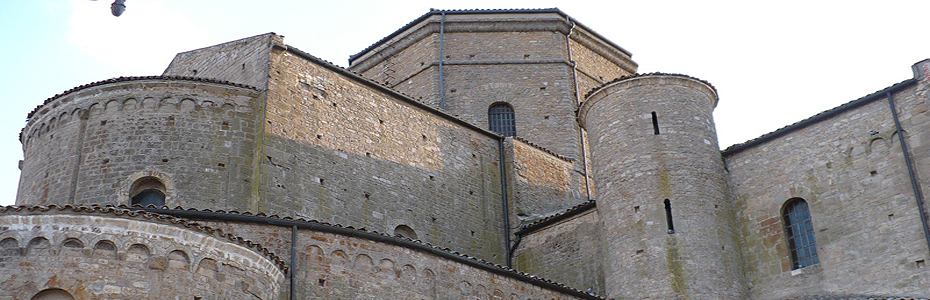
Constructed in 1200.
To admire the bell tower bizantino
|
|
| |
 |
|

|
Association for cultural activities and
initiatives |
|
|
Souvenir
di Pietragalla
Gadget
da regalare
Info>>

|

|
|
Urbsturismo:
The ancient Village of Pietragalla
The cultural tourism, to
riscoperta of the architectonic values and the
constructive techniques of a time through alleys
and the alleys of the historical center. |

|
|
 |
The
the beauty of Pietragalla puo' riscoprire in the
its center historical rich of vicoletti and arch
that scramble up until to arrive to the point piu'
high of the country dominate from the imposing
bell tower.
Pietragalla rises like takeover of feudale type
and as such it is dominatadal castle (puts into
effect them Ducale Palace) symbol of the political
power and from the Church Mother symbol of the
religious power. It is found for the historical
center, whose compactness e' verified to all the
effects, an outline to radial development whose
constituted main director e' gives Via Rome
while the rest of the contiguous lived one to it
finds one concentrico-wrapping development.
Compact
structure and radial configuration of the
historical center Via Rome main director 1 Palace
2 Ducale Church Mother
|
|
The village was fortified and
the course of walls marked the limits delineates to you in
clean way from puts into effect them historical center. In
this case the name of "citta' fortress" attributed to
Pietragalla and e' was still appropriated.
An other hypothesis that
denies the existence of the town-walls building which would
have been replaced from the same buildings, to the outside
high and tangent, with the series is advanced of arches
minors who concurred the access with the inside of the
village.
|
|
The access was guaranteed from
three doors with bastions, currently illeggibili, that they
represented the natural conclusion of the roads that give
the campaigns of the feudo carried to the village.
|
|
 |
|
The extension of arches
(approached secondary) leans you to the houses, from
the outside towards the inside, would have formed the
city limit. The public square assumed a true one and
own appearance that enclosed all connotes you of the
medioevale public square; in it public manifestations
were carried out or religious celebrations, it flanked
the building politico(Palazzo Ducale) and that
religious (Church Mother). After all the public square
was articulated on two levels represents to you from
terrazzamenti and whose spazialitą generated the
destination of use (civil and religious). |
|
 |
One worthy peculiarity
of relief: The "Cuntane"
As the
"antichi" knew to resort to espedienti particular in the
way to construct in order to improve the own living
conditions e' which could ascertain thanks to the
testimonies that in the course of the centuries are
succedute. Also not having instruments and technologies
that today can be used, the man of the antiquity made of
necessity virtue resorting with a lot sagacia simple
sure effective sagacities but, that they could above all
confer dignity and quality to the constructions under
the profile of the comfort inhabited. All this finds
partial reply in our historical center where e' possible
to notice a peculiarity that it deserves without doubt
attention for the technological and architectonic aspect
that it covers.
Draft of
the "Cuntane"; this dialectal term indicates the
variable tightest space from a minimum of 30 to a
maximum of 60 cm between two manufactured aggregations
of of the same one comparto. |
|
 |
The function the
main of the the "Cuntane" e' that one of convogliare and smaltire
the water piova some of unload from the stratum inner of the roof
of the manufactured ones through gronde and pluviali, thanks to a
light slope formed from the advanced and inferior level of the two
roads that delimit comparto.L' interspazio with the aid of small
openings practiced in the masonry or small windows, guarantee the
aeration and the partial lighting system of the spaces that show
oneself to you, generally they are of the premises of service like
the kitchen or the bath. |
|
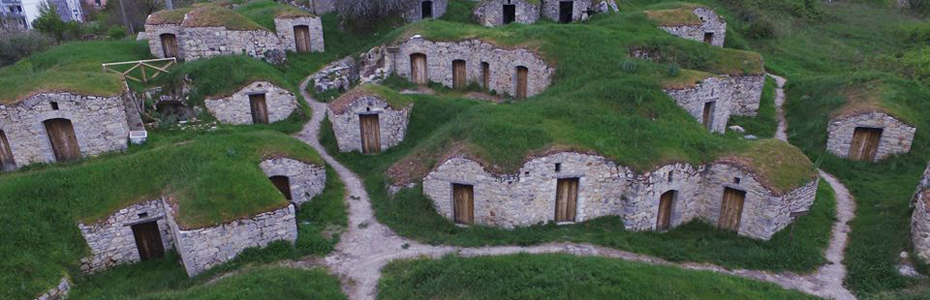
The Wine cellars
of the center storico:"I Rutt"
Covering the roads and the alleys of famous the
historical center the strong presence of the
premises used after wine cellar, the so-called
ones "rutte" according to the pietragallese
dialectal jargon. They are concentrated mostly
along Via called Mancosa therefore why situated in
the zone North of the historical center and
therefore little exposed sole.La to the greater
part of these premises they constitute of the true
and own cavities basements.
Obtained digging in the land of tufacea nature;
situated generally regarding the street level to a
depth that goes from the 4 to the 5 meters, you
approaches through one inner scale in stone or
tufo. The wine cellars are developed under the
rooms pushing itself to considerable depths to
whose inside develops a temperature of 7 °C that
it assures a natural habitat for the conservation
of the wine in botti of oak.
|
 |
The horizontal closing that delimits these
premises from those soprastanti of the rooms
e' of the type turns to botte that it can be
in local or obtained stone in the tufacea
cliff. In order to favor the ventilation and
therefore the improvement of the
termoigrometriche conditions to their inside
has been predisposed of the holes in the
masonry or the finestrelle of dimensions
generally 10x20 cm. |
|

 |
|
|
Fotogallery:Percorrendo i vicoli del centro storico
Per
ingrandire le immagini basta cliccare sulle miniature
|
|
|
|